

Drug & Substance Guide
Adderall Addiction: Signs, Effects, and Treatment Options
Admissions answered 24 hours a day · Free and confidential
Excellent 4.6 out of 5 434 Google reviews across our locations



What clients say
Trusted by clients across Texas
4.6 from 434 Google reviews across 9 locations
Across Nova Recovery Center, Briarwood Detox Center and Eudaimonia Recovery Homes
★★★★★
“Nova is far from perfect, and some of the information can be misleading. But if you want to cover the 12 Steps while enjoying good food and a beautiful scenic view, this is the place for you. The…”
10 months ago · Wimberley
★★★★★
“I did 90 days at Nova Recovery 6 years ago. I am still sober today. And living a life I could have never imagined. The people and the program they are running impacted me for a lifetime. Better than…”
2 years ago · Wimberley
★★★★★
“I went to Nova almost 9 months ago and I wouldn’t change it for the world. The staff when I first entered were very nice and welcoming. As a 19 year old that didn’t know what I was getting myself…”
2 years ago · Austin
★★★★★
“Nova Recovery Center has been an invaluable part of my journey to sobriety. The intensive inpatient program, coupled with the unwavering support and guidance from my recovery specialist, Mark Rector…”
2 years ago · Austin


★★★★★
“I had such a positive experience at Nova Recovery in Wimberley! The staff genuinely cares and went above and beyond to support me every step of the way. The peaceful setting made it easier to focus…”
a year ago · Wimberley
★★★★★
“I love Nova so freaking much. Nova has saved my life in more ways than one. I was hopeless and had no solution suffering from this disease. The staff there never gave up on me. I was the worst client…”
2 years ago · Austin
★★★★★
“I know Mark rector is non-binary however it saved my life and it did a good job with CPR and I don't know how aside from staying sober I could ever repay it thank you Mr or Mrs or whatever you're…”
8 months ago · Austin
★★★★★
“It's been a few years since I was a patient at Nova Recovery Center. Recently I have been reflecting on my time there and how incredibly grateful I am for the experience I had. I have been to 7 rehab…”
2 years ago · Austin


Exceptional standards, backed by credible organizations
Our affiliations and accreditations



What Adderall is
Adderall is a prescription stimulant for ADHD and narcolepsy, combining amphetamine and dextroamphetamine to raise dopamine and norepinephrine.
It is a Schedule II controlled substance because its potential for abuse and addiction is high, and it is safe and effective at the prescribed dose. The problem is what happens at other doses. This page covers how Adderall compares with Vyvanse, whether it is addictive, the signs of addiction, the effects, and the treatment options.
- What it is
- A prescription stimulant for ADHD and narcolepsy
- Classification
- Schedule II controlled substance
- How it works
- Raises dopamine and norepinephrine
- Where the risk is
- Misuse for performance or recreation
Stimulant misuse is treatable, and the first call is a conversation rather than a commitment.
Discover More About Prescription Stimulant
Everything You Need to Know...
View Prescription Stimulant Glossary
Is Adderall Addictive?
Yes, Adderall is highly addictive prescription drug. Long-term drug use can cause tolerance, dependence, and lasting side effects. Though adderall pills are prescribed, misuse is dangerous and comparable to illegal stimulants medication. Crushing or injecting it increases overdose risk, especially for those with amphetamine addiction.
What Are Signs and Symptoms of Adderall Addiction?
People often misuse Adderall not to get high, but to boost energy, focus, or lose weight. Abusers include students, professionals, athletes, and those with past substance issues. Signs of high dose misuse include unexplained weight loss, sleeplessness, large doses, recreational use, snorting, hyperactivity, and combining it with other substances. Learn why mixing Adderall and alcohol is especially risky.
Related: Is modafinil addictive?, a non‑amphetamine “study drug” some people try as an Adderall alternative.
Education & Support
Adderall is a stimulant medication that can be addictive, especially when misused or taken without a prescription. Dependence may develop through tolerance, cravings, or using it to boost focus or energy. The quiz below can help assess potential misuse.
Not sure what to do?
Tell us what’s going on. We’ll listen, answer questions about detox and next steps, and help you decide a plan that feels safe.
Call Nova recovery admissions 24/7
Freedom Starts Here. Take Back Your Life Today.
Same-Day Admissions in Austin Available.
What Are Side Effects of Adderall Addiction and Abuse?

How Common Is Adderall Addiction and Abuse in America?
Adderall is the most prescribed stimulant in the U.S. Teens and young adults are an increase risk of addiction. However, anyone using Adderall can become addicted over time.
In 2016, 2.6 million people tried stimulant drugs to get high for the first time. Also, 4.3 million people said they used these drugs to get high in the last month.
Overdose deaths from stimulant abuse rose by 30 percent in 2017. There were 7,663 stimulant overdose deaths, up from 5,992 in 2016.
Adderall is both physically dependent and psychologically addictive. Many misuse it from school into work, believing it boosts success. Despite being prescribed for medical conditions, it’s wrongly seen as safe. Often, people get it from friends, not doctors.
We accept most major insurance
Most major insurance covers treatment here
We'll check your benefits for free and tell you what you'd actually pay, before you commit to anything.
















Takes about 2 minutes · No obligation · Or call (512) 605-2955
Don't see yours? We work with more plans than we can show here.
VERIFY YOUR INSURANCE | 100% CONFIDENTIAL

How Long Does Adderall Stay in Your System?
There is no physician-approved recommended way to flush Adderall out of your system. However, Adderall has a short half life of 9 to 14 hours after ingestion. Adderall normally will only last in your urine from three to seven days and in your bloodstream for at most 24 hours.
The times can change based on several factors. These include the amount of medication taken and the person’s body composition.






Break Free Today. A New Life Awaits.
Same-Day Admissions in Austin Available.

Adderall Withdrawal Timeline
Adderall withdrawal can last days to weeks, depending on usage and treatment plan. In the first 1–3 days, expect fatigue, hunger, headaches, and sleep issues. By days 4–7, physical symptoms ease, but mood issues like panic or depression may begin.
At two weeks, cravings, fatigue, and irritability are common. After 3–4 weeks, most symptoms fade, though mood swings may persist longer.

Treatment Options for Addiction
Addiction may be difficult to overcome, but it’s not impossible. A complete, long-term addiction treatment program can help with the physical, mental, social, and behavioral parts of addiction. It also offers peer support to maintain long-term sobriety.
The National Institute on Drug Abuse says that addiction treatment lasting less than 90 days is not very effective. This means addiction treatment that lasts 90 days or longer is more likely to yield positive results.
A full 90-day rehab program gives people time to look at their behaviors. They can learn to adopt healthier habits and practice those skills. It also gives more time to deal with emotional issues like trauma, anxiety, PTSD, and other mental health problems.
More Healing. More Hope. More You. Start the Journey.
WE ACCEPT MOST INSURANCES




Inpatient Rehab vs. Outpatient Rehab
Drug rehab includes two main options: inpatient and outpatient. Inpatient rehab offers structure and on-site living, with therapy and group support.
Outpatient rehab is flexible. It is great for people with jobs or families. It still offers strong support from peers and professionals.
The best choice depends on individual needs and budget. It depends on your health insurance benefits or other payment methods you choose, such as:
- Employee Assistance Program benefits
- Healthcare loans
- Out-of-pocket payments
Live Free. Begin Your Recovery Now.
Same-Day Admissions in Austin Available.

Top Questions for Adderall
Adderall’s half-life is ~10 hours, clearing in 2–3 days, but up to 7 days with heavy use. Detection windows vary: blood (1–2 days), urine (1–3+ days), saliva (24–48 hrs), hair (90 days).
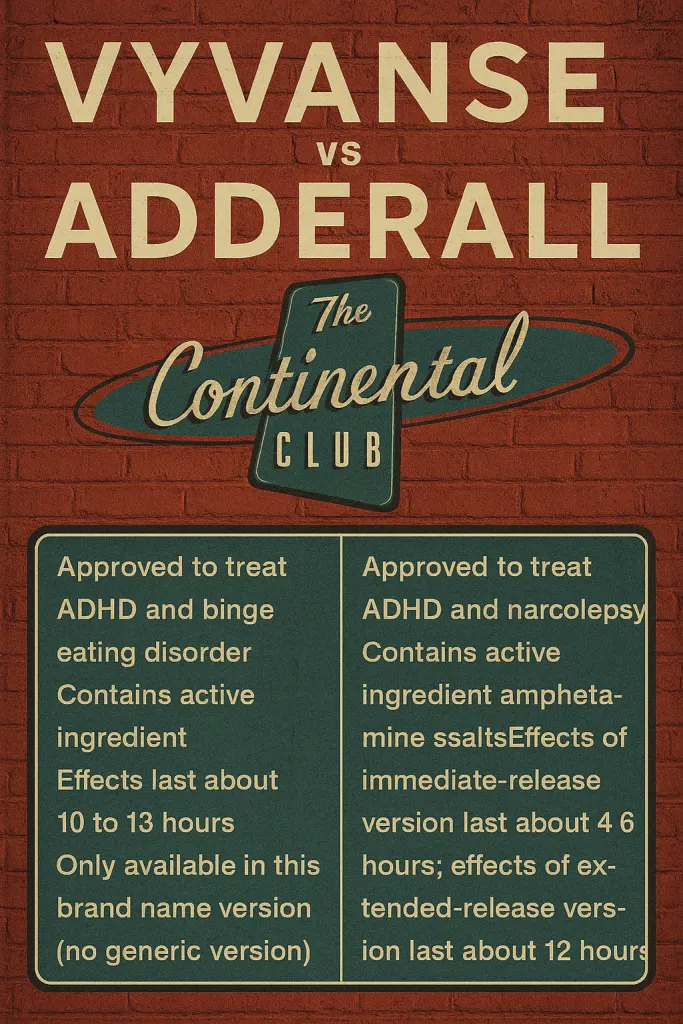
Vyvanse (lisdexamfetamine) is longer-acting and harder to abuse than Adderall. Both treat ADHD; Vyvanse also treats binge eating. Effects include increased focus or euphoria (non-ADHD users). Withdrawal may last 3–4 weeks, with fatigue and depression common.
Adderall is a Schedule II stimulant with high misuse risk. Side effects range from dry mouth to rare psychosis. IR lasts 4–6 hrs; XR lasts 8–12 hrs.
Frequently Asked Questions About Adderall
Does Adderall show up as methamphetamine?
Yes, Adderall can trigger a positive result for amphetamines on a drug test, but it is not the same as methamphetamine. Adderall contains mixed amphetamine salts that may be detected in screenings designed to identify stimulant use.
What ADHD medication is similar to methamphetamine?
Desoxyn (methamphetamine hydrochloride) is an FDA-approved ADHD medication that is chemically similar to methamphetamine. However, drugs like Adderall and Vyvanse are more commonly prescribed because they are considered safer and more effective.
What narcotic is similar to Adderall?
Adderall is not a narcotic. It is a central nervous system stimulant. However, other stimulants like Ritalin (methylphenidate) and Concerta may have similar effects in treating ADHD.
Are Adderall and methylphenidate the same thing?
No. Adderall contains amphetamine salts, while methylphenidate is the active ingredient in Ritalin and Concerta. Both are stimulants used for ADHD treatment but act differently in the brain.
What does Adderall do?
Adderall increases dopamine and norepinephrine levels in the brain. This helps improve focus, attention, and impulse control for individuals with ADHD.
Who should not take Adderall?
Adderall is not recommended for people with heart disease, high blood pressure, glaucoma, severe anxiety, or a history of substance abuse. Always consult a doctor before use.
Can I take Adderall if I’m not ADHD?
Taking Adderall without an ADHD diagnosis or prescription is unsafe and illegal. Misuse increases the risk of addiction, cardiovascular complications, and mental health problems.
What does Adderall make you feel like?
For those with ADHD, Adderall helps improve concentration and reduce hyperactivity. For people without ADHD, it may cause overstimulation, euphoria, or anxiety, which can lead to misuse and dependence.
What are some common prescription stimulants?
Common prescription stimulants include Adderall, Ritalin, Concerta, Vyvanse, and Dexedrine. All are primarily used for ADHD and narcolepsy.
What is the most widely used stimulant drug?
Adderall is one of the most widely prescribed stimulant medications in the U.S., especially for ADHD. Other popular stimulants include Ritalin and Vyvanse.
Is Adderall very addictive?
Adderall is a Schedule II controlled substance, a classification it carries because its potential for abuse and addiction is high. At the dose a doctor sets it is generally effective and safe. The risk is in misuse: taking it more often than prescribed, or using it to boost performance at school or work.
What are the long-term effects of Adderall use?
The page lists malnutrition, mental illness, dizziness, mood swings and exhaustion among the common risks of long-term Adderall abuse. Severe effects may involve heart problems, ulcers, skin problems, seizures, coma or death.
A non-stimulant ADHD medication
Talk to someone today
Ready when you are
Admissions are answered 24 hours a day by a person, not a queue. We will check your benefits for free and tell you what treatment would actually cost.
Free and confidential · No obligation