

Drug & Substance Guide
Ethosuximide (Zarontin): Complete Guide for Absence Seizures
Admissions answered 24 hours a day · Free and confidential
Excellent 4.6 out of 5 434 Google reviews across our locations



What clients say
Trusted by clients across Texas
4.6 from 434 Google reviews across 9 locations
Across Nova Recovery Center, Briarwood Detox Center and Eudaimonia Recovery Homes
★★★★★
“Nova is far from perfect, and some of the information can be misleading. But if you want to cover the 12 Steps while enjoying good food and a beautiful scenic view, this is the place for you. The…”
10 months ago · Wimberley
★★★★★
“I did 90 days at Nova Recovery 6 years ago. I am still sober today. And living a life I could have never imagined. The people and the program they are running impacted me for a lifetime. Better than…”
2 years ago · Wimberley
★★★★★
“I went to Nova almost 9 months ago and I wouldn’t change it for the world. The staff when I first entered were very nice and welcoming. As a 19 year old that didn’t know what I was getting myself…”
2 years ago · Austin
★★★★★
“Nova Recovery Center has been an invaluable part of my journey to sobriety. The intensive inpatient program, coupled with the unwavering support and guidance from my recovery specialist, Mark Rector…”
2 years ago · Austin


★★★★★
“I had such a positive experience at Nova Recovery in Wimberley! The staff genuinely cares and went above and beyond to support me every step of the way. The peaceful setting made it easier to focus…”
a year ago · Wimberley
★★★★★
“I love Nova so freaking much. Nova has saved my life in more ways than one. I was hopeless and had no solution suffering from this disease. The staff there never gave up on me. I was the worst client…”
2 years ago · Austin
★★★★★
“I know Mark rector is non-binary however it saved my life and it did a good job with CPR and I don't know how aside from staying sober I could ever repay it thank you Mr or Mrs or whatever you're…”
8 months ago · Austin
★★★★★
“It's been a few years since I was a patient at Nova Recovery Center. Recently I have been reflecting on my time there and how incredibly grateful I am for the experience I had. I have been to 7 rehab…”
2 years ago · Austin


Exceptional standards, backed by credible organizations
Our affiliations and accreditations


Medically Reviewed

Drug Information
Brand / names: Zarontin, Ethosuccimide, Ethylmethylsuccimide, Emeside, Petinimid
Drug class: Anticonvulsants and Antiseizure
Ethosuximide Overview at a Glance
Ethosuximide (Zarontin)
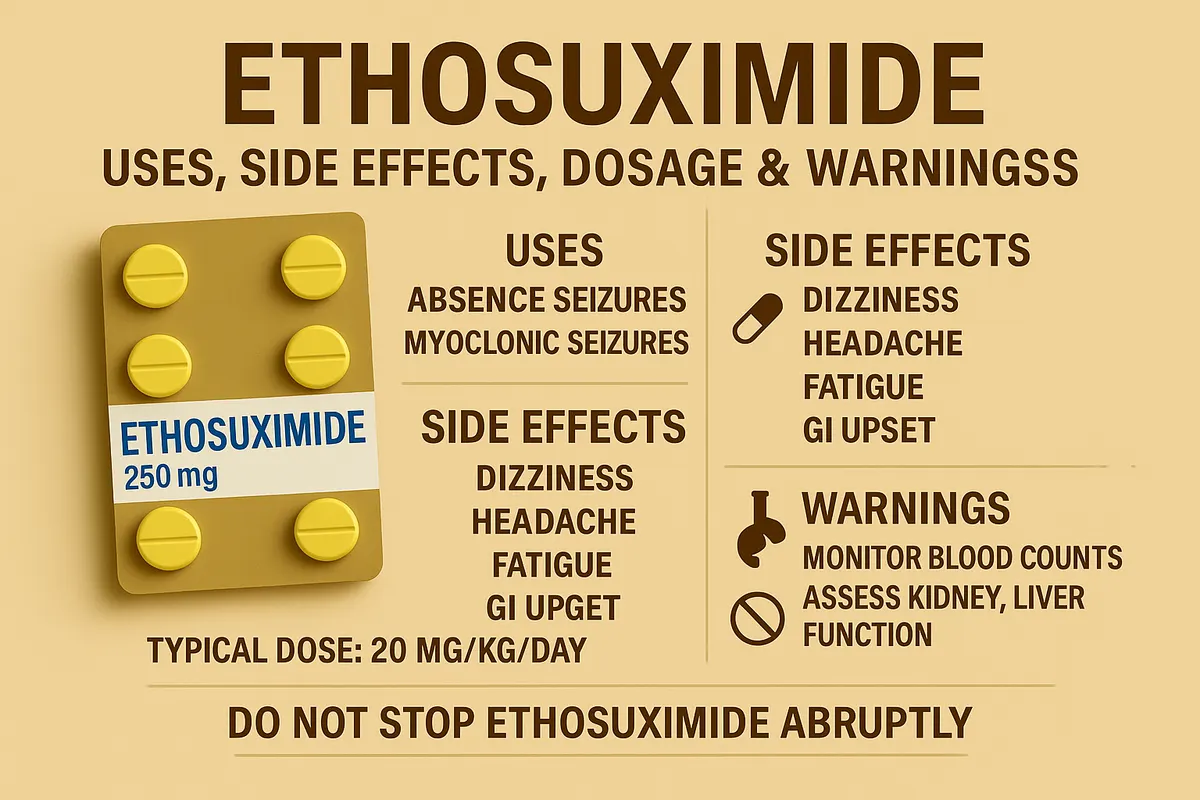
Ethosuximide is an FDA-approved anti-seizure medicine that controls absence seizures, the brief lapses in awareness also described as staring spells.
It comes as 250 mg capsules and as a 250 mg per 5 mL oral solution. In practice it is used most often in children and adolescents with absence epilepsy, and it can be useful in adults with the same seizure type.
- Brand names
- Zarontin, Emeside, Petinimid
- Drug class
- Anticonvulsant and antiseizure
- Treats
- Absence (petit mal) seizures
- Role in therapy
- First-line for childhood absence epilepsy
Dosing, side effects and monitoring are below. The page also warns against stopping abruptly, which is a conversation for the prescriber.

How Ethosuximide Works
Absence seizures arise from pathological oscillations in thalamo‑cortical networks. Ethosuximide dampens these oscillations primarily by blocking low‑threshold T‑type calcium channels in thalamic neurons. That reduces the 3‑Hz spike‑and‑wave discharges typical of absence seizures, helping prevent the brief periods of impaired awareness.
About the Author

Mat Gorman
Mat Gorman is an experienced mental health writer and medical researcher with over a decade of experience in addiction recovery education. He specializes in translating complex clinical topics into clear, compassionate content that empowers families and individuals seeking treatment. Mat has collaborated with recovery centers, licensed therapists, and physicians to publish evidence-based resources across the behavioral health space. His passion for helping others began after witnessing the struggles of loved ones facing substance use disorder. He now uses his platform to promote hope, clarity, and long-term healing through accurate, stigma-free information.











Indications & Role in Therapy
- Primary indicationControl of absence (petit mal) seizures. It is not broadly effective for other generalized seizures (e.g., tonic‑clonic) and may even worsen them in some mixed‑syndrome cases, so clinicians confirm seizure type before initiating therapy.
- First‑line statusIn a landmark NEJM randomized trial of children with new‑onset absence epilepsy, ethosuximide and valproic acid were more effective than lamotrigine for seizure control after 16 weeks; ethosuximide produced fewer attentional side effects than valproic acid, supporting its first‑line use when absence seizures occur without generalized tonic‑clonic seizures.
Side Effects

Common (often early and dose‑related)
- Gastrointestinalnausea, vomiting, abdominal pain/cramps, loss of appetite
- Neurologic/CNSdrowsiness, dizziness, headache; hiccups have been reported
These frequently improve as the body adjusts over 1–2 weeks; taking with food and slow titration can help.
Ready to take the next step?

Serious (seek urgent care)
- Severe skin reactionsStevens‑Johnson syndrome (SJS) and DRESS: stop the drug and get immediate medical care if rash, blistering, mucosal sores, fever, or facial swelling occur.
- Blood dyscrasiasrare but potentially life‑threatening (e.g., leukopenia, agranulocytosis, aplastic anemia); report sore throat, fever, easy bruising/bleeding promptly.
- Systemic lupus erythematosus (SLE)like reactions: report chest pain, joint pain, fever, rash, hair loss, or breathing trouble.
- Psychiatric effectsmonitor for new or worsening depression, suicidal thoughts, agitation, or abnormal behaviors; contact a clinician if these emerge.
- Worsening/appearance of generalized tonic‑clonic seizures in mixed epilepsies has been reported; clinicians choose therapy based on seizure types.
We accept most major insurance
Most major insurance covers treatment here
We'll check your benefits for free and tell you what you'd actually pay, before you commit to anything.
















Takes about 2 minutes · No obligation · Or call (512) 605-2955
Don't see yours? We work with more plans than we can show here.
VERIFY YOUR INSURANCE | 100% CONFIDENTIAL

Monitoring & Therapeutic Drug Monitoring (TDM)
- Baseline and periodic labsCBC, liver function tests, and urinalysis are commonly recommended due to rare but serious hematologic, hepatic, and renal adverse effects.
- Serum ethosuximide levelsTarget 40–100 μg/mL (may individualize). Levels assist when seizures persist, side effects occur, adherence is uncertain, or interacting drugs are added.
Special Populations

Pregnancy
Ethosuximide crosses the placenta. As with many anti‑seizure medicines (ASMs), there are reports of increased risk of birth defects with in‑utero ASM exposure; absolute risks and comparative safety profiles differ across agents. Decisions balance seizure control (critical in pregnancy) against potential risks, and often involve specialists. If pregnancy is planned or occurs, consultation and possible enrollment in a pregnancy registry are advised.
Freedom Starts Here. Take Back Your Life Today.
Same-Day Admissions in Austin Available.

Comparisons & Alternatives
- Ethosuximide vs ValproateComparable short‑term efficacy for absence seizures; ethosuximide tends to have fewer attentional adverse effects than valproate, which may influence first‑line selection in pure absence epilepsy. Valproate may be preferred if other generalized seizure types coexist.
- Ethosuximide vs LamotrigineEthosuximide generally outperforms lamotrigine for initial control of typical absence seizures in randomized data.

Practical Tips for Patients & Caregivers
- Adherence mattersTake it at the same time daily; titrate slowly if advised.
- Report concerning symptoms earlyfever, sore throat, rash, bruising/bleeding, mood changes.
- No abrupt stopIf therapy must change, your clinician will create a taper.
- StorageKeep at room temperature away from moisture/heat; protect oral solution from freezing/light.
Frequently Asked Questions About Ethosuximide and Addiction
What are the side effects of Ethosuximide?
Common side effects include nausea, drowsiness, dizziness, and fatigue. More serious risks include blood disorders, severe skin reactions, and suicidal thoughts, which require immediate medical attention.
What is the mechanism of action of Ethosuximide?
Ethosuximide works by blocking T-type calcium channels in the thalamus, reducing abnormal brain activity that causes absence seizures.
Is Ethosuximide safe for children?
Yes, Ethosuximide is considered a first-line treatment for childhood absence epilepsy, but it should always be prescribed and monitored by a pediatric neurologist.
What is the black box warning for Ethosuximide?
Ethosuximide carries a warning about the risk of suicidal behavior and ideation, requiring careful monitoring of mood and behavior changes.
What defines an addiction?
Addiction is characterized by compulsive drug use despite harmful consequences, often involving physical dependence and psychological cravings.
What are 5 signs of an addiction?
Warning signs include loss of control, cravings, neglect of responsibilities, withdrawal symptoms, and continued use despite harm.
How to get rid of addiction?
Treatment may involve medical detox, behavioral therapy, counseling, support groups, and long-term relapse prevention strategies.
What are the 4 elements of addiction?
The core elements are cravings, loss of control, tolerance, and withdrawal, which together sustain the cycle of addiction.
Can Ethosuximide be addictive?
While Ethosuximide is not typically associated with euphoria, misuse or abrupt discontinuation can lead to dependence and withdrawal symptoms, requiring medical supervision.
How can Nova Recovery Center help with Ethosuximide abuse?
Nova Recovery Center provides medically supervised detox, individualized treatment plans, and long-term recovery programs to address Ethosuximide misuse and build a foundation for lasting sobriety.

How Nova Recovery Center Helps with Ethosuximide Addiction and Abuse
Nova Recovery Center provides compassionate, evidence-based care for individuals struggling with Ethosuximide addiction and abuse. While Ethosuximide is most often prescribed to treat absence seizures, misuse of this medication can lead to dependence, withdrawal challenges, and serious health risks. At Nova, clients begin with a safe, medically supervised detox to manage symptoms and stabilize the body. From there, our treatment team develops personalized plans that address physical dependence and the emotional and behavioral patterns tied to substance use.
We offer a full continuum of care that includes residential treatment, intensive outpatient programs, and sober living support. Clients also engage in evidence-based therapies, relapse prevention training, and holistic practices to strengthen long-term recovery. Our programs emphasize accountability, structure, and peer support, key elements for lasting change. With licensed clinicians, recovery specialists, and a supportive community, Nova Recovery Center helps individuals rebuild healthier lives free from medication misuse. Ultimately, our goal is to guide clients toward long-term sobriety, improved well-being, and renewed hope for the future.
Get help today. Reach out now to start your path to healing.
References
- Glauser, Tracy A., et al. “Ethosuximide, Valproic Acid, and Lamotrigine in Childhood Absence Epilepsy.” The New England Journal of Medicine, 4 Mar. 2010. nejm.org: Full
- “Ethosuximide (Oral Route).” Mayo Clinic, updated 1 Aug. 2025. https://www.mayoclinic.org/drugs-supplements/ethosuximide-oral-route/description/drg-20072587
- “Ethosuximide Dosage Guide + Max Dose, Adjustments.” Drugs.com, updated 15 July 2025. https://www.drugs.com/dosage/ethosuximide.html
- “ZARONTIN (Ethosuximide) Prescribing Information.” U.S. Food and Drug Administration (accessdata.fda.gov), 2016. FDA: Prescribing information (PDF)
- “ZARONTIN. Ethosuximide Capsule: Medication Guide and Label.” DailyMed, U.S. National Library of Medicine. https://dailymed.nlm.nih.gov/dailymed/medguide.cfm?setid=0e008f33-70a1-4bc6-b3a0-d45214418ab6 and related label entries.
- Hanrahan, B. “Ethosuximide.” StatPearls, NCBI Bookshelf, updated 2024. https://www.ncbi.nlm.nih.gov/books/NBK544244/
- “Ethosuximide.” MedlinePlus Drug Information. https://medlineplus.gov/druginfo/meds/a682327.html
- “Ethosuximide (Zarontin). Epilepsy Medication.” Epilepsy Foundation (epilepsy.com), 16 Oct. 2023. https://www.epilepsy.com/tools-resources/seizure-medication-list/ethosuximide
- “Ethosuximide.” WebMD, 21 Feb. 2025. WebMD: Details
- “Ethosuximide. Drugs and Lactation Database (LactMed).” NCBI Bookshelf, updated 15 Aug. 2024. NCBI Bookshelf: NBK501219
Other Outpatient Drug and Alcohol Rehab Locations
- IOP in Austin
- IOP in San Antonio
- IOP in Colorado Springs

Medical Disclaimer
The information on this page is provided for educational purposes only and should not be used as a substitute for professional medical advice, diagnosis, or treatment. Ethosuximide and other prescription medications must only be taken under the guidance of a licensed healthcare provider. Do not begin, stop, or adjust your dosage without consulting your doctor. If you experience severe side effects, withdrawal symptoms, or thoughts of self-harm, call 911 immediately in the United States or seek emergency medical care. For mental health support, you can also dial 988 to connect with the Suicide & Crisis Lifeline, available 24/7.

Nova Recovery Center Editorial Guidelines
By instituting a policy, we create a standardized approach to how we create, verify, and distribute all content and resources we produce. An editorial policy helps us ensure that any material our writing and clinical team create, both online and in print, meets or exceeds our standards of integrity and accuracy. Our goal is to demonstrate our commitment to education and patient support by creating valuable resources within our realm of expertise, verifying them for accuracy, and providing relevant, respectful, and insightful data to our clients and families.
Keep reading
- Lamotrigine (Lamictal): Uses, Dosing, Side Effects, Interactions & FAQs
- Anticonvulsants (Antiseizure Medications): Uses, Types, Risks & Safety
- Over the Counter Drugs
- Valproate (Valproic Acid / Divalproex): Complete Guide to Uses, Dosage, Levels, Side Effects & Safety
- Phenobarbital Addiction: Withdrawal and Treatment
Talk to someone today
Ready when you are
Admissions are answered 24 hours a day by a person, not a queue. We will check your benefits for free and tell you what treatment would actually cost.
Free and confidential · No obligation