

Nova Recovery Center
LGBTQ Addiction Treatment and Substance Abuse Resources
Admissions answered 24 hours a day · Free and confidential
Excellent 4.6 out of 5 434 Google reviews across our locations



What clients say
Trusted by clients across Texas
4.6 from 434 Google reviews across 9 locations
Across Nova Recovery Center, Briarwood Detox Center and Eudaimonia Recovery Homes
★★★★★
“Nova is far from perfect, and some of the information can be misleading. But if you want to cover the 12 Steps while enjoying good food and a beautiful scenic view, this is the place for you. The…”
10 months ago · Wimberley
★★★★★
“I did 90 days at Nova Recovery 6 years ago. I am still sober today. And living a life I could have never imagined. The people and the program they are running impacted me for a lifetime. Better than…”
2 years ago · Wimberley
★★★★★
“I went to Nova almost 9 months ago and I wouldn’t change it for the world. The staff when I first entered were very nice and welcoming. As a 19 year old that didn’t know what I was getting myself…”
2 years ago · Austin
★★★★★
“Nova Recovery Center has been an invaluable part of my journey to sobriety. The intensive inpatient program, coupled with the unwavering support and guidance from my recovery specialist, Mark Rector…”
2 years ago · Austin


★★★★★
“I had such a positive experience at Nova Recovery in Wimberley! The staff genuinely cares and went above and beyond to support me every step of the way. The peaceful setting made it easier to focus…”
a year ago · Wimberley
★★★★★
“I love Nova so freaking much. Nova has saved my life in more ways than one. I was hopeless and had no solution suffering from this disease. The staff there never gave up on me. I was the worst client…”
2 years ago · Austin
★★★★★
“I know Mark rector is non-binary however it saved my life and it did a good job with CPR and I don't know how aside from staying sober I could ever repay it thank you Mr or Mrs or whatever you're…”
8 months ago · Austin
★★★★★
“It's been a few years since I was a patient at Nova Recovery Center. Recently I have been reflecting on my time there and how incredibly grateful I am for the experience I had. I have been to 7 rehab…”
2 years ago · Austin



LGBTQ Addiction Help in Austin, TX
Why the rates are higher
LGBTQ people face more social rejection, harassment and stigma than heterosexual people, sometimes from their own families, and the stress that produces is what drives the higher rates of substance abuse and mental health problems the CDC records.
The gap is large. LGBTQ adults are more than twice as likely to abuse alcohol and drugs, and between 38 and 65 percent of transgender individuals have thought about suicide.
The resources and the treatment options below are gathered for that reason.
- Substance abuse rate
- 20 to 30 percent, against about 9 percent generally
- Alcohol
- 25 percent, against 5 to 10 percent generally
- Tobacco
- Up to 200 percent more than heterosexual and non-transgender peers
- Sources
- CDC, NAMI, Center for American Progress
Nova treats substance use and mental health together. Admissions calls are confidential.
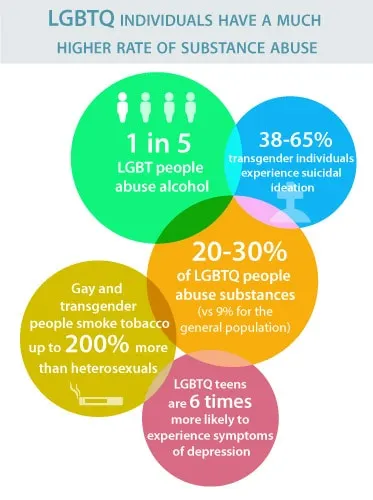
- 20-30% of LGBTQ people abuse substances, compared to about 9% of the general population.
- 25% of LGBT people abuse alcohol, compared to 5-10% of the general population.
- Gay and transgender people smoke tobacco up to 200 percent more than their heterosexual and nontransgender peers.
- LGBTQ teens are six times more likely to experience symptoms of depression than the general population.
- Between 38-65% of transgender individuals experience suicidal ideation.
Although our society is continually taking steps to improve equality among all people, including those who identify as LGBTQ, there are still many instances of prejudice, discrimination, and social stigma in the workplace, at school, within interpersonal relationships, and in the health care industry, as well as elsewhere.
Sources: https://www.nami.org/Find-Support/LGBTQ /media/issues__2012__03__pdf__lgbt_substance_abuse.pdf

Using Drugs and Alcohol to Cope
Due to the additional challenges LGBTQ individuals face, many of them turn to alcohol and drugs to cope. The fear of coming out and being discriminated against may also produce a great deal of stress and anxiety. As a result, substance abuse becomes a way of survival and a tool to numb feelings of stress, anxiety, depression, isolation, and fear. Substance abuse is not only physically harmful, but it can also contribute to the development of mental health problems and exacerbate existing ones. As a result, a person can easily become trapped in a never-ending cycle of substance abuse and mental health problems, with each one fueling the other.
How to Find Addiction Treatment for LGBTQ Individuals
Six or seven decades ago, homosexuality and bisexuality were often considered a mental illness in the eyes of mental health professionals. As a result, many patients were forced to undergo treatment against their will. Fortunately, this is no longer the case, but many LGBTQ individuals still avoid getting professional help for their addiction and mental health problems due to social stigma and a general lack of understanding and empathy among treatment professionals.
Although there is generally a much more positive attitude among treatment professionals regarding the LGBTQ community today, many addiction treatment professionals still lack the necessary knowledge and understanding to treat the unique needs of addicted LGBTQ individuals. Unfortunately, treatment often focuses much more on the person’s gender identity than their addiction and mental health problems, which is not helpful.
Finding LGBTQ-friendly addiction treatment can sometimes be difficult, but there are local resources available that can help you or a loved one overcome substance abuse problems and successfully make the transition into a fulfilling, sober life. It’s important to find an addiction treatment provider that is familiar with current terminologies and newer forms of defining the LGBTQ community. An example is the term LGBTQIAPK, which incorporates a wide range of terms that people use to identify themselves and express their sexual orientation and gender identity. LGBTQIAPK is a term used in the LGBTQ community that stands for:
- Lesbian: Women who are attracted to other women
- Gay: Men who are attracted to other men
- Bisexual: A person who is attracted to both males and females
- Transgender: A person whose gender identity does not match the gender they were assigned at birth
- Questioning: A person who is unsure of their sexual orientation or gender identity and is exploring
- Intersexual: A person who has both male and female physical characteristics
- Asexual or Ally: A person who does not experience sexual attraction toward any gender or a supporter of the LGBTQ+ community who does not identify as LGBTQ+
- Pansexual: A person who is not limited in sexual choice regarding biological sex, gender, or gender identity
- Kink: A person who expresses their sexuality in ways that differ from mainstream society
If you are searching for an LGBTQ-friendly addiction treatment provider, keep in mind that effective substance abuse treatment should provide the following things:
- Qualified, understanding, and empathetic treatment professionals
- Intensive counseling that addresses LGBTQ-specific needs and risk factors
- A safe, accepting, and judgment-free treatment environment
- Treatment for co-existing disorders
- Support from LGBTQ peers who are also in recovery
- Non-traditional family therapy for couples, partners, and families
- Specialized aftercare services for LGBTQ individuals

LGBTQ Addiction Treatment and Recovery Resources in Austin, TX
A combination of addiction treatment services may be the best way to meet your unique treatment needs. Depending on your situation and the severity of your addiction, these services may include:
- Medical detox: This type of inpatient detox provides professional medical care during withdrawal from alcohol and other substances. Clinical counseling also gives clients an opportunity to work through emotional and psychological issues while preparing them for entry into a drug and alcohol rehab program.
- Residential drug and alcohol rehab: Inpatient rehab offers intensive care for LGBTQ individuals with severe or long-lasting addictions. It provides a structured and supportive environment and a break from the stressors of everyday life so clients can focus on their healing and recovery.
- Outpatient drug and alcohol rehab: Outpatient rehab is ideal for LGBTQ clients who cannot commit to a residential program. It offers more flexibility with flexible outpatient meetings so clients can tend to other obligations at work or home while they complete treatment.
- Sober living program: LGBTQ-friendly sober living homes provide sober and judgment-free living spaces for people in recovery, in addition to recovery support and social services. This structured home environment acts as a buffer between residential rehab and the return to society to better prepare clients for the increased responsibilities of independent sober living.
There are also several different addiction recovery groups in Austin that cater to the LGBTQ population. They include:
| AA Meetings | NA Meetings | Al-Anon and Nar Anon Meetings | LGBTQ Roundup | SMART Recovery Meetings |

LGBTQ Sober Living Homes in Austin
Some sober living homes may also offer LGBTQ-friendly sober living environments for people in recovery. Our closest LGBTQ sober living facility is an apartment complex at 7211 Northeast Dr, Austin, TX 78723.
At Eudaimonia Recovery Homes, we welcome all LGBTQ individuals who are working to achieve a life of sobriety. We want you to know that you deserve the highest quality of addiction treatment in a space that fosters acceptance for all, encourages honest and open communication, and meets your unique treatment needs. Whether you are lesbian, gay, bisexual, transgender, or questioning, we are here for you. Call today to speak with an admissions representative about our LGBTQ sober living options. References:
- Centers for Disease Control and Prevention. (n.d.). Substance Use Among Gay and Bisexual Men | CDC. Retrieved March 7, 2019, from https://www.cdc.gov/msmhealth/substance-abuse.htm
- National Alliance on Mental Illness. (n.d.). LGBTQ | NAMI: National Alliance on Mental Illness. Retrieved March 7, 2019, from https://www.nami.org/Find-Support/LGBTQ
- Center for American Progress. (2012, March 9). Why the Gay and Transgender Population Experiences Higher Rates of Substance Use [PDF]. Retrieved March 7, 2019, from /media/issues__2012__03__pdf__lgbt_substance_abuse.pdf
Call Us Now and Begin Healing at (512) 605-2955
Or text us and we will call you right back.
Not quite ready for a call? You can fill out our insurance verification form.

What Makes Us Different
- Gender-specific treatment
- Evidenced-based treatment
- 12-Step immersion
- 90-day residential treatment
- Family program
- Full continuum of care
- Insurance and private pay
Ready to take the next step?
100% Confidential Guarantee

Confidential Consultation
Nova Recovery Center is dedicated to helping you or your loved one get help. Please call or fill out this form for a confidential consultation.
One of our understanding, dedicated advisors will contact you about your options. Begin healing today.
Nova Recovery Center is dedicated to helping you or your loved one get help. Please call or fill out this form for a confidential consultation. One of our understanding, dedicated advisors will contact you about your options. Begin healing today.

Related Resources for LGBTQ+ Individuals in Recovery
Nova Recovery Center provides comprehensive, affirming addiction treatment across our locations. Explore these resources to learn more about our approach and services:
- Choosing the Right Addiction Recovery CenterDiscover what makes Nova Recovery Center a trusted choice for individuals seeking inclusive, evidence-based care in Texas and Colorado.
- 7 Strategies and Expert Tips for Successful Drug Rehab and RecoveryLearn proven strategies to support your recovery journey, including creating a safe, affirming environment that respects your identity.
- Therapy and Counseling: Addiction TherapyUnderstand the role of individual and group therapy in addressing addiction and co-occurring mental health concerns in an LGBTQ+-affirming setting.
If you or a loved one is seeking compassionate, identity-affirming addiction treatment in Austin or any of our other locations, call us at (512) 605-2955 to speak with an admissions specialist today.

Explore Nova’s Treatment & Recovery Resources
Understanding your treatment options and recovery journey is essential. Below are key resources to support LGBTQ+ individuals and their families:
- Gender-Specific Addiction Treatment Programs, Learn how tailored therapy approaches support recovery for LGBTQ+ patients.
- Family Counseling for Addiction Recovery, Strengthen family relationships and support during treatment.
- The Role of Community & Sober Friendships in Recovery, Building authentic connections that sustain long-term sobriety.
- Choosing the Right Addiction Treatment Center, A guide to evaluating programs that align with your values and needs.
- Nova’s Intensive Outpatient Programs (IOP): Flexible, evidence-based treatment in Austin and surrounding areas.
If you’re ready to take the next step toward recovery, call Nova Recovery Center at (512) 605-2955 today to speak with an addiction specialist about personalized, affirming care.
Talk to someone today
Ready when you are
Admissions are answered 24 hours a day by a person, not a queue. We will check your benefits for free and tell you what treatment would actually cost.
Free and confidential · No obligation